
You’ve closed on your home. The boxes are stacked. Utilities are turning on.
Then the question hits: How do I get my mailbox keys?
It sounds simple. But in San Antonio—especially in HOA communities or newer developments—the answer depends on who owns the mailbox.
Let’s walk through it clearly and strategically so your mail access is secure from day one.
Bottom Line Up Front
- If the seller has the mailbox keys, they should transfer them at closing.
- If you live in an HOA community, the HOA or property manager may control mailbox access.
- If it’s a USPS-owned cluster mailbox and no key was provided, you must request a lock change through the local post office.
- You cannot legally duplicate or force open a USPS mailbox.
- Plan for 3–10 business days if a lock replacement is needed.
Why This Matters
Your mailbox is not just about convenience.
It’s about identity protection, financial security, and preventing mail theft. Bank statements, tax documents, VA paperwork, and government notices often arrive within weeks of closing.
For PCS families relocating to Joint Base San Antonio (JBSA), timely access to mail can impact housing allowance adjustments, command paperwork, and TRICARE updates.
This is a small detail with big implications.
Step 1: Check Your Closing Packet
Mailbox keys are often transferred the same way garage remotes and house keys are—at closing.
What to Look For
- Small labeled envelope
- Keys separate from house keys
- HOA welcome packet
If you used a real estate agent, confirm whether the seller provided mailbox keys during possession transfer.
If keys were promised but not delivered, your agent should contact the listing agent immediately.
Step 2: Identify the Type of Mailbox
In San Antonio, there are three common mailbox types:
1. Individual Curbside Mailbox
You likely own the box. If no key exists (rare), you can replace the lock yourself.
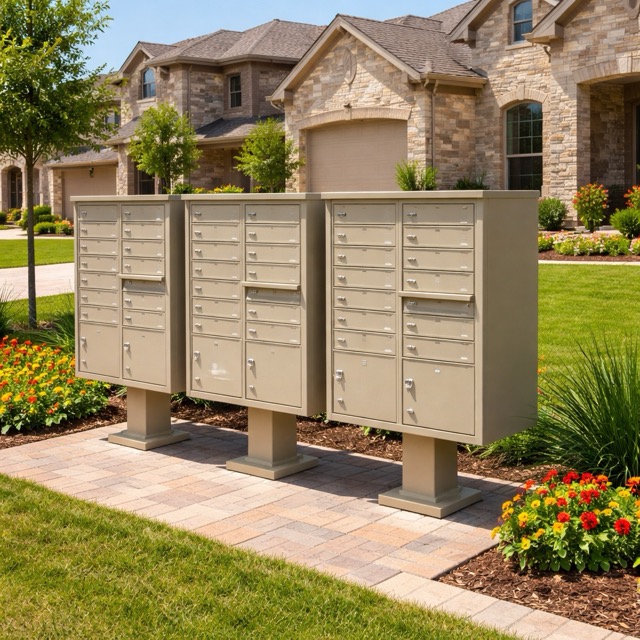
2. Cluster Mailbox (Common in HOAs and New Builds)
This is the large shared mailbox station serving multiple homes. These are typically owned and maintained by USPS.
You cannot change these locks yourself.
3. HOA-Controlled Mailbox Units
Some gated or townhome communities manage mailbox distribution internally before USPS takes over.
Always verify ownership before taking action.
Step 3: If You Have an HOA
Contact the HOA management company first.
Ask:
- Do you issue mailbox keys?
- Was a key logged for my address?
- Is there a transfer form required?
- Are there mailbox deposits or replacement fees?
Some San Antonio HOAs require written requests. Others coordinate directly with USPS.
Do not assume USPS controls the box without confirming.
Step 4: If USPS Owns the Mailbox
If no key was provided and USPS owns the unit, you must request a lock replacement.
Here’s How:
- Visit your assigned local post office (based on ZIP code).
- Bring photo ID.
- Bring proof of ownership (closing disclosure or deed).
- Request a mailbox lock change.
- Pay the replacement fee (varies by location).
USPS will schedule a technician to replace the lock.
Once complete, you’ll receive new keys.
Important:
You cannot access the mailbox until the lock is changed.
Mail will continue accumulating inside during this time.
Typical Costs and Timing
- Lock replacement fee: Typically $20–$40
- Processing time: 3–10 business days
- Peak moving season may increase wait times
For summer PCS season in San Antonio, plan early. Post offices near JBSA Randolph and JBSA Lackland often experience higher seasonal volume.
Pitfalls to Avoid
1. Forcing the Mailbox
This is a federal offense if USPS-owned.
2. Assuming the Seller Didn’t Need to Provide Keys
If keys existed, they should have been transferred.
3. Waiting Weeks to Address It
Important documents may already be inside.
4. Forgetting to Forward Mail
Set up mail forwarding immediately through USPS when you move.
Verify Locally: What to Confirm
Mailbox ownership structures can vary by subdivision.
Before taking action, confirm:
- Who owns the mailbox unit?
- Is it USPS-assigned or HOA-managed?
- Are there outstanding community mailbox policies?
- Is there a designated post office branch for your address?
- Are there seasonal delays due to PCS influx?
When in doubt, start with your HOA and your local post office.
FAQ
1. Should mailbox keys be given at closing?
Yes, if they exist. They are part of property possession items.
2. What if the seller lost the keys?
You must request a USPS lock replacement.
3. Can I copy USPS mailbox keys?
No. They are restricted.
4. How do I know which post office serves my home?
Check your ZIP code’s assigned branch through USPS.
5. What if I’m moving from out of state?
You may need to handle lock replacement after arrival with ID.
6. Can my real estate agent handle it?
They can guide you, but USPS typically requires the homeowner present.
7. What if I live in a new construction neighborhood?
Builders sometimes coordinate initial mailbox setup. Verify before contacting USPS.
8. Does this apply differently on military bases?
On-base housing has separate mail distribution systems. Contact housing services directly.
9. What if I never receive mail?
Confirm your address is registered with USPS and that forwarding is active.
San Antonio Context
Many newer communities across North San Antonio, Alamo Ranch, Schertz, Cibolo, and areas surrounding JBSA utilize centralized cluster mailboxes.
During peak relocation months (May–August), mailbox lock changes may take longer than average.
Plan proactively if you are purchasing during PCS season.
Quick Checklist
- Confirm mailbox keys at closing
- Identify mailbox ownership (HOA vs USPS)
- Contact HOA if applicable
- Visit assigned post office with ID if needed
- Set up mail forwarding
- Monitor mailbox for first 2 weeks
Next Best Step
Option 1: DIY
Start by reviewing your closing packet and contacting your HOA or local post office.
Option 2: Professional Help
Ask your real estate professional to coordinate communication with the seller or HOA.
Option 3: Low-Pressure Consult
If you’re relocating to San Antonio or PCSing to JBSA, schedule a strategy call to make sure no small details derail your transition.